
 vs
vs
Instantly vs Apollo: Comparing $47 Flat-Rate Outreach to a $49-Per-Seat Database
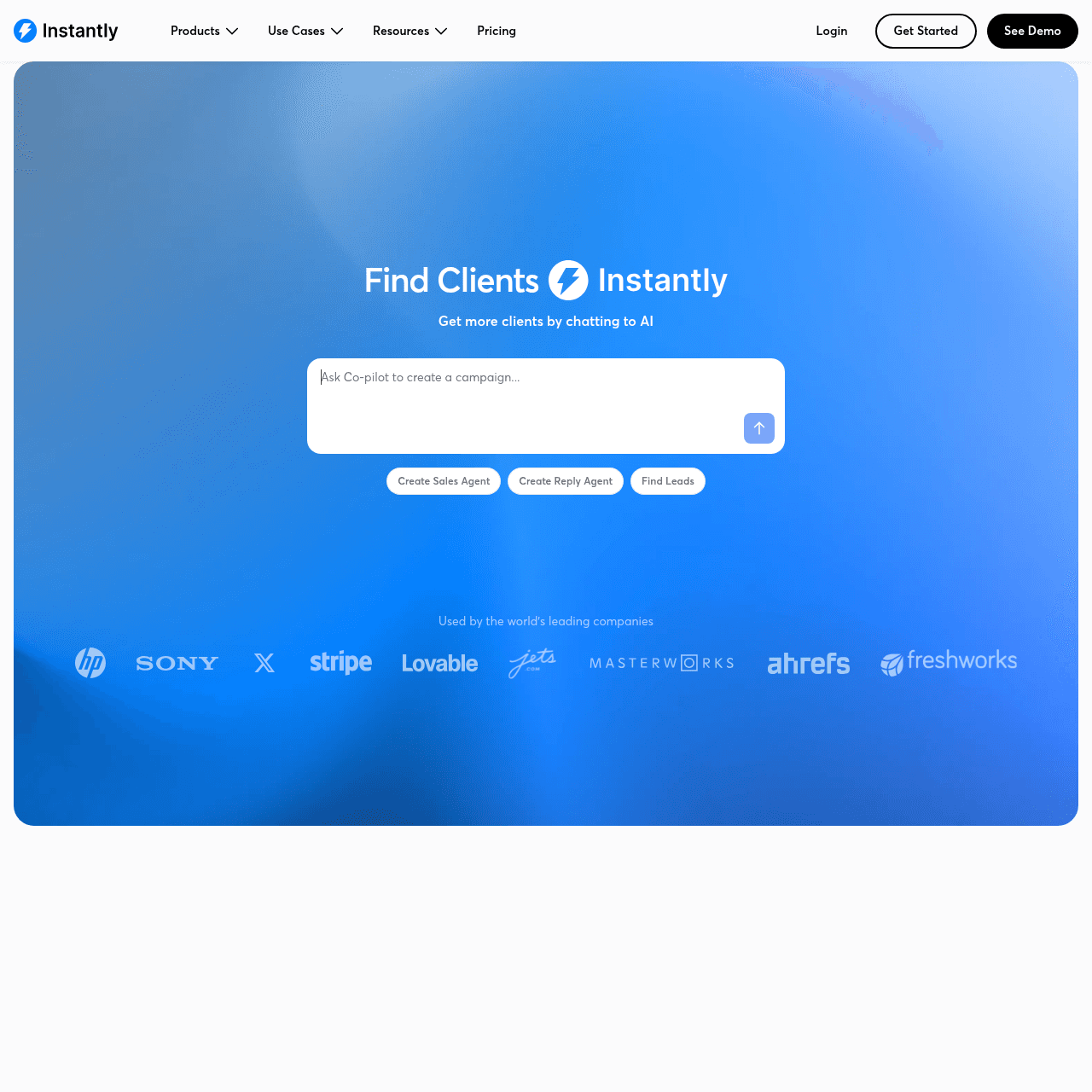
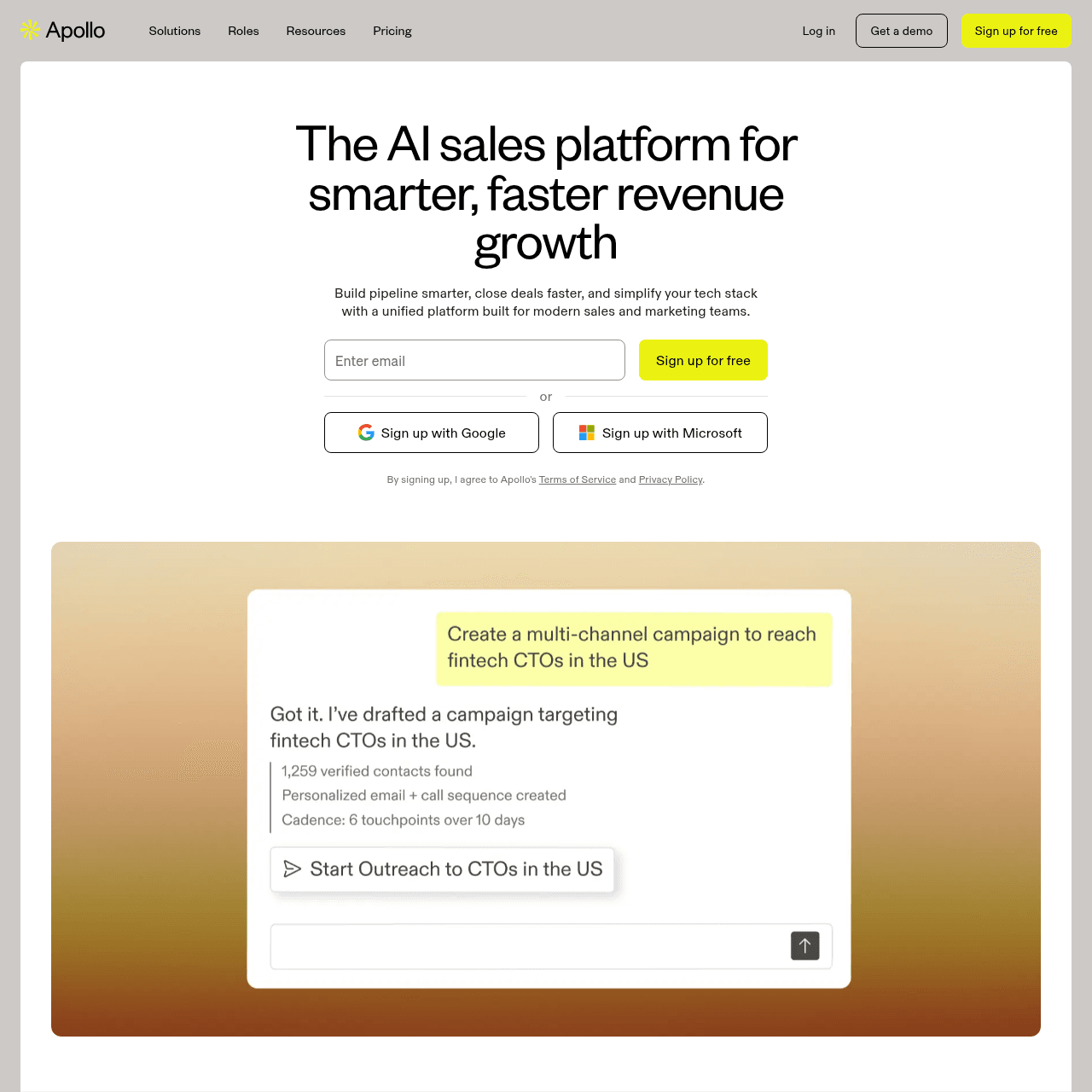
Instantly Growth is $47/mo flat for outreach with Leads sold separately. Apollo Basic is $49/user/mo for a 275M database. Different pricing models.

The Verdict
The product designs reflect what each company decided was the bottleneck. Instantly assumes you have contacts and need to send to them at volume: $47/mo flat for Outreach Growth, with Growth Leads as a separate $47/mo subscription if you want their 450M database. Apollo assumes you need contacts and outreach is a useful bonus: $49 per user per month for Basic with a 275M database plus sequences plus intent signals plus a CRM, with the per-seat pricing rewarding small focused teams over large outbound shops.
The flip point is team size and workflow distribution. A solo founder running heavy email volume from one inbox pays $47 on Instantly and is over-budget at $49 on Apollo because they only need one seat's worth of data anyway. A five-person SDR team prospecting heavily pays $245 on Apollo Basic for five seats of data depth and would underuse Instantly's sending capacity.
Neither tool is the all-purpose answer.
Instantly vs Apollo.io: Feature-by-Feature
| Feature |  Instantly Instantly |  Apollo.io Apollo.io |
|---|---|---|
| Infrastructure | ||
| Dedicated IPs | Enterprise only Private Deliverability Network on Enterprise | No No dedicated IP option on any plan |
| Isolated Infrastructure | No Shared IP pools on standard plans | No Shared infrastructure across all plans |
| Email Warmup | Unlimited Unlimited warmup on all Outreach plans | Basic Email warmup available but not a core focus |
| Email Validation | Separate product Verification sold separately | Built-in Verification included via credit system |
| Pricing | ||
| Pricing Model | Per-volume Plans based on email volume and contacts | Per-user + credits $49-$79 per user per month, credit-based enrichment |
| Starting Price | $47/mo Growth: 5K emails, 1K contacts | Free / $49/user/mo Free plan (900 credits), Basic at $49/user/mo |
| Sending | ||
| Email Accounts | Unlimited Unlimited on all Outreach plans | Limited Tied to mailbox connections per user |
| Features | ||
| Lead Database | 450M+ contacts Separate Lead Finder product | 275M+ contacts Built-in database, the core of the platform |
| CRM | Separate product CRM sold separately from Outreach | Built-in Full CRM with deal tracking and pipeline |
| Multi-Step Sequences | Yes A/B testing and multi-step email sequences | Yes Sequences with email, calls, tasks, and LinkedIn |
| Built-in Dialer | No No built-in calling | Yes Dialer included on Professional and above |
| LinkedIn Integration | No No LinkedIn automation | Yes LinkedIn task steps in sequences, Chrome extension |
| Unified Inbox | Yes Unibox in Outreach product | Yes Inbox management within platform |
| Intent Data | No No buyer intent data | Yes Buyer intent signals and alerts |
| Other | ||
| Free Plan | No No free plan | 900 credits/month Free plan with limited sequences and credits |
| Scale | ||
| White-label | Enterprise only Custom enterprise pricing | No No white-label offering |
The Sender-First Stack vs The Database-First Stack
Apollo and Instantly are not competing on the same axis. They're asking opposite first questions about your outbound bottleneck. Apollo's product design assumes finding the right people is the hard part: search 275M contacts, filter by 65+ firmographic and technographic attributes, layer on intent signals, then push the matched cohort into sequences.
Outreach is the last mile, not the centerpiece. The pricing reflects this. $49/user/mo Basic is priced as data access with sequencing thrown in, not the other way around.
Instantly's product design assumes sending at volume is the hard part: optimize warmup, mailbox rotation, A/B testing, and inbox placement, then leave list-building to whatever upstream tool you prefer (including Apollo). Growth Leads exists as a separate product because Instantly is willing to lose that battle if you want to bring your own data. The pricing reflects this too: $47/mo Growth covers sequencing only.
The practical buying signal: if you can't articulate a tight ICP and you're still discovering who to sell to, Apollo's data layer is load-bearing. If you have a list already (bought, scraped, manually researched, sourced through ZoomInfo) and the question is "how do I get this in front of 5,000 people without burning my domain," Instantly's sender layer is load-bearing.
Key takeaways
- Apollo: database-first design with sequencing bolted on at $49/user
- Instantly: sender-first design with database sold separately as Growth Leads
- Apollo wins when ICP is still being discovered
- Instantly wins when you already have a list and need to send to it
Apollo's Three Pricing Axes vs Instantly's Two
Apollo prices on three independent axes simultaneously. Axis one is seats: $49 Basic, $79 Professional, $119 Organization (3-user minimum). Axis two is credits: each axis tier ships with a credit pool (Basic includes mobile/export credits at a capped rate, Professional unlocks more, Organization more again).
Credits deduct on email reveals, phone reveals, exports, and enrichment, and Apollo recently moved phone reveals from "free with plan" to "credit-cost," which materially raised real-world bills for outbound calling teams. Axis three is add-on dialers and Apollo Voice products bolted on by user. The three axes compound: a 3-user team on Professional with heavy phone usage and enrichment isn't paying $79 x 3, it's often paying $79 x 3 plus dialer minutes plus credit overage at $0.05-$0.20 each.
Instantly prices on two axes: workspace volume tier and which separate products you subscribe to. Outreach is one fee that covers the whole team. Growth Leads is another fee, also workspace-wide.
There's no per-seat multiplier and no credit pool to overrun; uploaded contact limits cap the upper bound instead. Annual billing is mandatory on Apollo paid tiers. The monthly toggle exists on the page but locks the highest sticker.
Instantly bills monthly by default with annual discount available.
Key takeaways
- Apollo prices on three axes: seats, credits, dialer add-ons (all compound)
- Instantly prices on two: workspace tier, separate product subscriptions
- Apollo Organization requires a 3-user minimum ($357/mo floor)
- Annual billing is forced on Apollo paid tiers; monthly is locked to the highest sticker
Intent Signals vs Portfolio Depth
Apollo's 275M database is smaller than Instantly Growth Leads' 450M, but the comparison misses the actual difference. Apollo bundles intent data: Bombora-sourced topical intent, website-visit intent (via the Apollo Chrome extension and pixel), and news-trigger signals (funding rounds, leadership changes, layoffs, hiring spikes). For teams running intent-based outbound (only contacting accounts showing buying signals), Apollo is the only one of the two with this layer at standard pricing.
Instantly Growth Leads goes deeper on raw contact resolution but does not expose intent. The 450M number reflects a broader pool of B2B contacts including international and SMB segments that Apollo undersamples. Credit cost varies 1-4 per lookup depending on enrichment depth, which makes Growth Leads more cost-effective for high-volume, lower-resolution prospecting (announcement-style sends to large pools) and Apollo more cost-effective for low-volume, intent-targeted outreach (only contacting the 200 accounts trending up this week).
The portfolio question on Instantly is whether you also need Verification, Inbox Placement, and CRM as separate subscriptions. Apollo bundles all three into its core platform with no separate fee. A buyer comparing Apollo Basic ($49/user) to the full Instantly stack (Outreach + Growth Leads + Verification + CRM) finds Apollo simpler operationally even if not always cheaper.
Key takeaways
- Apollo bundles intent signals (Bombora, web pixel, news triggers) into Basic
- Instantly Growth Leads has 450M contacts but no intent layer at any tier
- Apollo bundles CRM and verification; Instantly sells both separately
- Apollo: better for intent-targeted outbound. Instantly: better for high-volume sends
Picking By Team Shape and Outbound Motion
A solo founder doing email-only outbound to a manually researched list pays $47 on Instantly and ignores Apollo entirely. The lead database is the only reason to pay Apollo at $49/user, and a solo with a known ICP doesn't need 275M contacts to sift through. A solo founder still figuring out who to sell to pays $49 on Apollo Basic, gets the data plus a usable sequencer, and only graduates to Instantly when send volume outgrows Apollo's basic sending limits (typically around 10K sends/month).
A 3-person SDR team pays $147/mo on Apollo Basic (3 seats) versus $97 on Instantly Hypergrowth plus $47 Growth Leads ($144). The bills are nearly identical; the choice comes down to whether intent signals matter (Apollo) or whether deliverability tooling and higher send caps matter (Instantly). A 5-person SDR pod hits Apollo Organization's 3-user minimum easily and pays $119 x 5 = $595/mo for full data depth.
The same team on Instantly Hypergrowth + Growth Leads Growth + Verification lands around $200/mo. Apollo wins only if intent signals are economically load-bearing. Most outbound teams find at this scale that data depth from Apollo plus sending from a dedicated sender wins on both cost and performance.
Key takeaways
- Solo with known list: Instantly Growth ($47), skip Apollo
- Solo discovering ICP: Apollo Basic ($49), database is the value
- 3-person team: prices match; pick by intent signals vs deliverability
- 5+ person teams: Apollo for data, dedicated sender for sending. Splitting wins.
Pros & Cons
Instantly
Strengths
- Focused cold email tool with strong deliverability features
- 450M+ lead database (separate product)
- Lower entry price for email-only at $47/mo
- Unlimited email accounts on all plans
- Simple, clean interface for campaign management
Limitations
- Shared IP pools on all standard plans
- No built-in dialer, CRM, or LinkedIn features
- Core features sold as separate products
- Growth plan caps at 5,000 emails and 1,000 contacts
- No free plan or trial
Apollo.io
Strengths
- 275M+ lead database with buyer intent data
- Built-in CRM with deal tracking and pipeline
- Dialer and LinkedIn task steps in sequences
- Free plan with 900 credits per month
- All-in-one sales intelligence and engagement
Limitations
- Shared infrastructure with no dedicated IP option
- Per-user pricing gets expensive for teams
- Credit system can run out fast during heavy prospecting
- Email deliverability is not the primary focus
- Warmup is basic compared to dedicated email tools
Got questions? We've got answers.
They pair more often than they compete. Teams that need both data depth and sending performance commonly run Apollo for prospecting and intent signals, then push the matched cohorts into a dedicated sender. Apollo's built-in sequencing is fine for small-volume validation, but most operators outgrow it past 5K-10K sends/month because warmup, mailbox rotation, and inbox-placement tooling are afterthoughts on Apollo.
Ready to hit primary?
Set up SendKit's isolated infrastructure and start sending in under 15 minutes.
Dedicated IPs on every plan. Cancel anytime.